
Peatland Conservation Projects
Community-based Sustainable Peatland Management Programme
Indonesia’s peatlands are critical carbon sinks, but decades of degradation and poor water management have left them highly flammable, contributing to severe forest fires and transboundary haze that affects millions across Southeast Asia, including Singapore.
Riau and West Kalimantan, two of the most affected regions, face escalating fire risks that threaten local livelihoods, biodiversity, and public health. In addition, communities dependent on these peatlands struggle to transition to sustainable land-use practices due to resource constraints and limited access to alternative livelihoods.

Non-Governmental Group PM.Haze has been collaborating with local NGOs and peatland communities in Indonesia to restore and safeguard these vital ecosystems. By co-developing tailored, community-driven solutions, they ensure that peatland restoration is both sustainable and beneficial to the people who depend on them.
Their programme employs a two-pronged strategy combining:
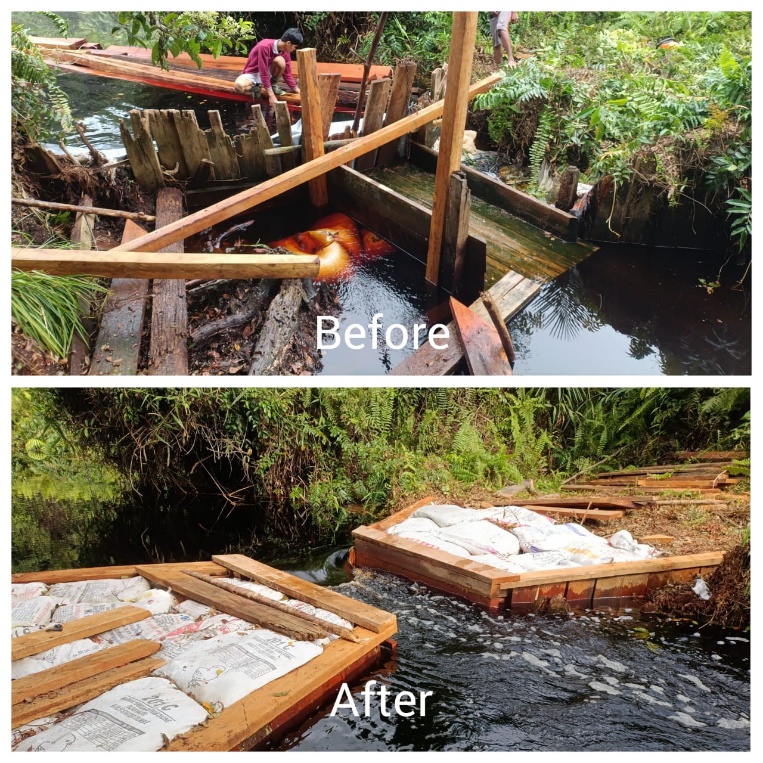
1) Ecological Restoration, rewetting degraded peatlands by constructing and maintaining canal blocks to retain moisture, and revegetating degraded areas; and
2) Community Empowerment & Sustainable Livelihoods, actively involving the local community, equipping them with knowledge and incentives to participate in sustainable peatland management and conservation.
The long-term objectives include reduced fire risks, enhanced local engagement, and the development of a scalable model for community-driven peatland management and conservation. This is to address the biggest transboundary issues of our time, including climate change and haze pollution.

Project Partner:

Sustainable Agriculture Promotion in Peatland Areas to Prevent Palm Oil Expansion
This project focuses on restoring and sustainably managing degraded peatlands in Desa Pematang Duku, Bengkalis District, Indonesia. The area has experienced extensive deforestation and peatland degradation, resulting in biodiversity loss, increased fire risk, and high carbon emissions. To address these challenges, the project adopts an integrated approach combining hydrological rehabilitation, revegetation with native species, fire prevention, and community-based agroforestry using Liberica coffee.
Key interventions include the construction of four canal blocks to rewet 80 hectares of peatland, planting 2,000 native tree seedlings on four hectares, and installing three Fire Danger Rating System (FDRS) boards to reduce fire risks across six hectares. Additionally, the project will develop sustainable livelihoods by introducing agroforestry with 2,000 Liberica coffee seedlings and supporting one new community enterprise based on non-timber forest products (NTFPs).

The project will train 50 local farmers on sustainable land management practices that avoid burning, aiming for an 80% adoption rate. By integrating ecological restoration with livelihood development, the initiative strengthens community resilience, reduces fire risk, and contributes to climate mitigation and biodiversity protection on peatlands.

Project Partner:
Project updates:
Community Meeting on Peatland Conservation and Alternative Livelihood:
Seminar with Local Universtiy Students on Peatland Conservation and Eco-business:
Tingkatkan Kompetensi Pembelajaran Budaya dan Bisnis, Dosen Pengampu Polbeng Gelar Seminar
Project Introduction Video:
https://www.youtube.com/watch?v=zOVGGy5pIa4