
Saving biodiversity in Southeast Asia (SEA)
by Neil Cox
Biodiversity is all of the many ecosystems, species and genes found in nature—with SEA’s biodiversity particularly rich in animals and habitats, relative to the rest of the globe.
Ecosystems, from rainforests through peat swamps to marine environments contain a wealth of species. Many may be very familiarto and well-loved by us, such as Asian elephants and orangutans, with innumerable lesser-known species. All are vital for ecosystem well-being.
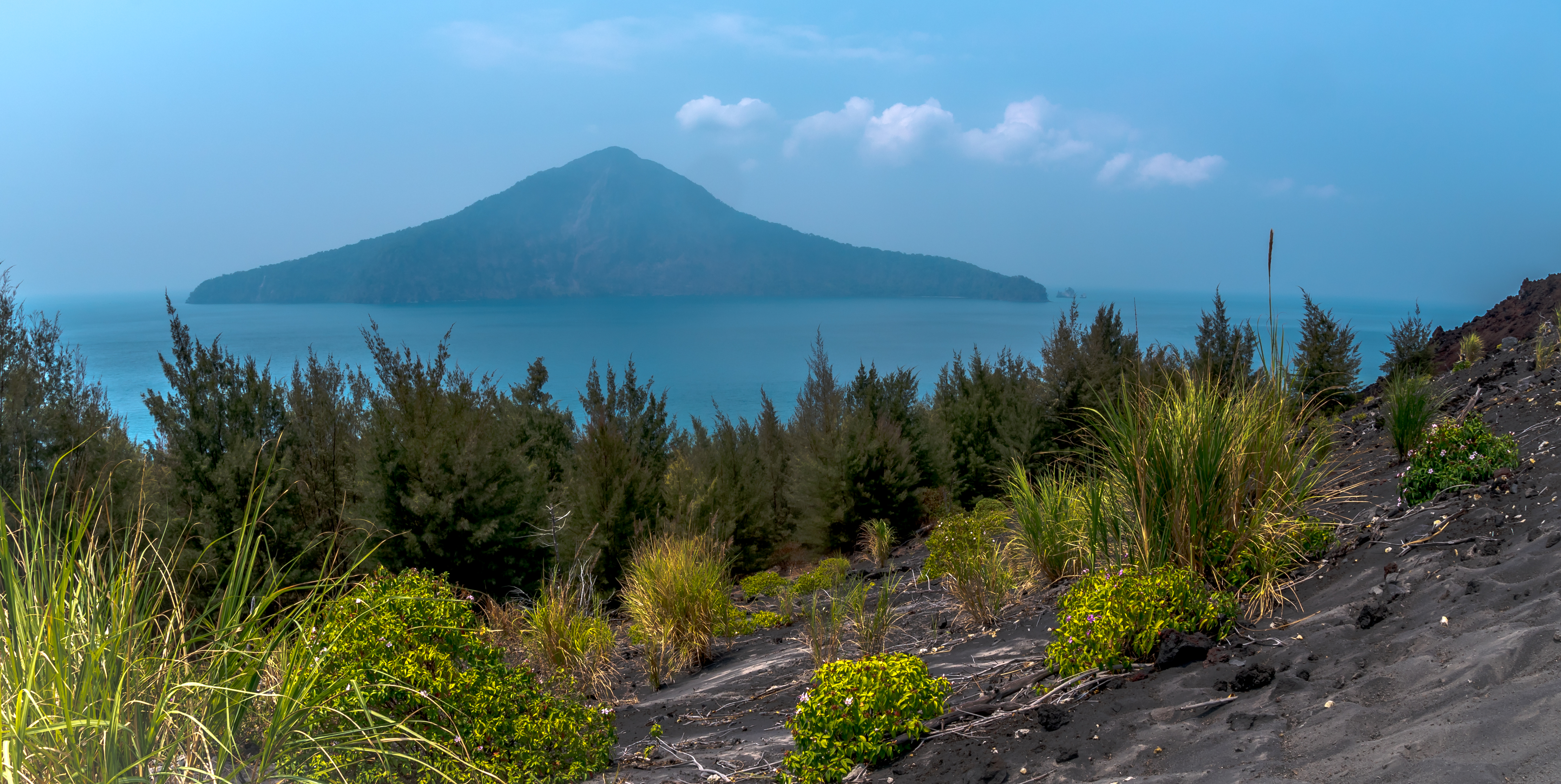
Anak Krakatau in Indonesia is a vital natural laboratory for primary ecological succession. (Photo credit: Philip Bowles.)
Why does this matter to us? Ecosystems provide people with many natural services, including wild foods, important carbon sequestration, pollination of crops and new medicines. Damaging ecosystems, including removing key species from these, can impact these services which in turn may have negative implications for people, both locally and on a global scale.
However, there is understandably much pressure on these wild areas, often through a need for resources such as agricultural land, housing, fisheries, freshwater or timber. How we manage these needs while maintaining the natural world is crucial for future sustainable growth.
There are a number of estimates of the thousands, or millions, of individual species found in the lands and waters of SEA. Perhaps the most worrying number comes from the International Union for the Conservation of Nature (IUCN) which states that of the 33,248 SEA species evaluated for extinction risk by the IUCN Red List of Threatened Species experts, at least 7,384 are highly threatened with extinction. Indeed, some species, such as Schomburgk's Deer (Rucervusschomburgki), only ever found in Thailand, have already been sadly lost and are now globally extinct.

The File-eared Tree Frog (Polypedatesotilophus)can only be found in Brunei, Indonesia, and Malaysia. (Image credit: Philip Bowles.)
Also notable is that the conservation status for most of SEA species is still unknown. Of concern is that these are often overlooked but nonetheless important plants, fungi and invertebrates. IUCN is still working to assess the conservation status of many more SEA species and guide conservation actions before these are lost forever.
While this may sound sobering; there are many opportunities to prevent and even reverse biodiversity loss in SEA. Through information found in the IUCN Red List, national red lists, and the studies of many national SEA and international researchers, we now know where investments can be made to secure biodiversity in SEA.
These can be through the identification, management and restoration of Key Biodiversity Areas, through the establishment of new national protected areas, or through ‘Other Effective Area‑Based Conservation Measures’ (areas outside formal protected areas that are managed to support biodiversity and local community needs). There is additionally a need to effectively communicate the value of nature and these species places and species if we want to turn biodiversity loss around.
What role does PPCF have in environmental and biodiversity conservation? PPCF is supporting research into SEA species that are often overlooked for conservation measures—often because they may not be charismatic or well-known. However these species can be some of the most threatened (listed as Critically Endangered by IUCN) in the world. PPCF is currently supporting work on the Javan warty pig (Sus verrucosus), the Bawean warty pig (Sus blouchi), and the Bawean deer (Axis kuhlii), some of the most highly threatened species of large mammals in SEA. More about the conservation of these species can be read here.

Javan Warty Piglets rescued under the Javan Species Recovery Programme (JaSpeR), as supported by PPCF. (Photo credit: JaSpeR.)
Unlike in decades previously, we now know much more about where the imperiled wildlife and habitats of SEA are located, and we also understand the many serious and sometimes increasing threats to these. Now is the time to really push for action to save and restore these unique species and habitats as, without them, SEA will be much poorer for it.